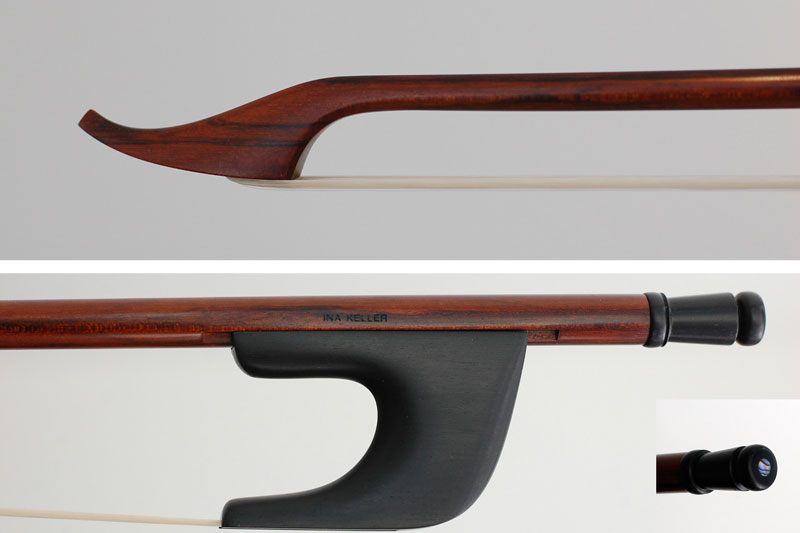
Over the years, I have developed a number of models that have proven to work well. My standard model is a late baroque bow made of snakewood with a screw frog. This model is exemplary in its versatility; it works wonderfully for the works of Bach, Handel, and others. Coming from a modern bow is not difficult.
My early baroque bows with clip-in frogs are also made of snakewood. The contact with the string is much more direct, and the light stick allows for fast and agile playing, as is often required in the works of Corelli, Schmelzer, and Biber.
I am also passionate about making bows from local woods, simply out of the conviction that tropical woods are not everything and that many native wood species definitely found their way into bow making in the 17th and 18th centuries. Woods such as plum, cherry, hornbeam, and service tree are not only beautiful but also bring out truly wonderful tonal colours from the instruments.
The classical bow designs differ significantly from the baroque ones. Some are direct copies, for example, of Dodd bows. Others are inspired by the old masters, but ultimately influenced by my own concept. The choice of wood is crucial for the tone. In addition to snakewood, I also use ironwood and pernambuco.
Violin and Violabows
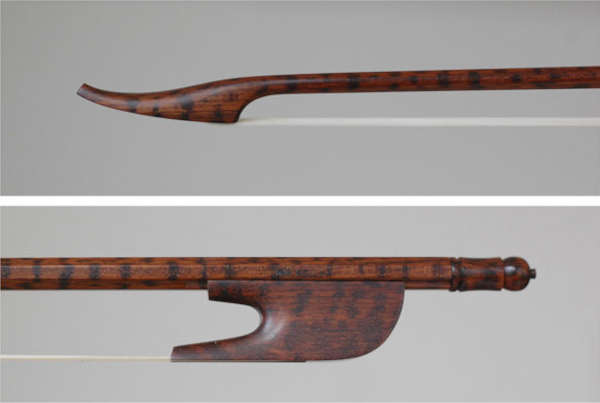
Cellobows
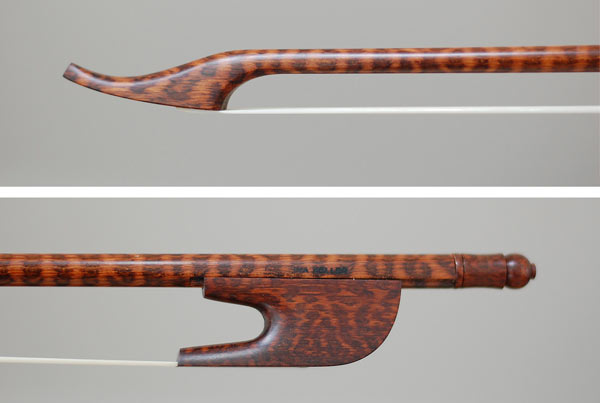
Bows for Viola da Gamba
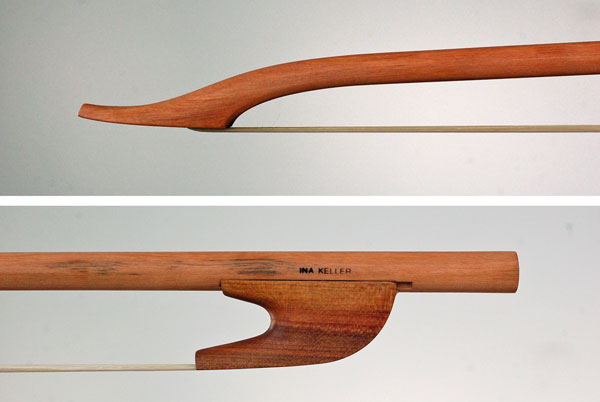
Bassbögen